MichaelErlewine
New Member
- Joined
- Aug 16, 2024
- Messages
- 26
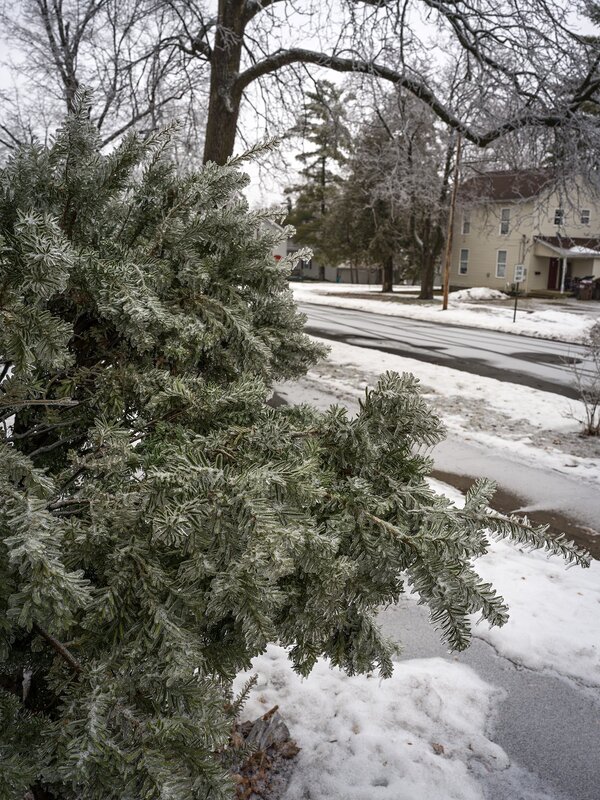
Well, heavy ice storm brought down the Internet for 24 hours, iced the trees twice, and paved a layer of solid ice on streets and sidewalks. Wires for phone and Internet are hanging down a few feet from the ground. The Internet wire just was replaced and I can post.
The big trees are dropping ice-heavy branches, especially the fir trees. The power is out, not here but wherever the transformers we need are. We have a Generac, a whole house power unit, yet no need to use it. Everything here was completely iced yesterday, and then double-dipped for this morning. This is northern Michigan in winter.
I’m in here peering out at the ice and then, putting on ice cleats, I ventured outside briefly and snapped a few photos. It feels like a snow day when I was a kid and didn’t have to go to school. Anyway, I wanted to get back online for this post.
I am told that ‘professional’ photographers love the new Hasselblad XCD V series, the XCD 25mm, 28mm, 38mm, 55mm, 75mm, 90mm, and 35-100mm BECAUSE they are so similar in color, tone, and also have C-AF, and that aside from the length of the lens (mm), these lenses can be swapped seamlessly with one another to complete a photo project.
I can see how that is true, but I still favor differences in draw and style that make a particular lens special. I like the ‘special” and am used to it the Nikon system, both traditional and mirrorless. Don’t get me wrong. I love the older Hasselblad XCD lenses, yet I too appreciate the lighter weight, less bulk, and faster focus of the new XCD V series. Yet I do wonder if the IQ is as good as these older XCD lenses. To me, it’s not. And I have learned that with Hasselblad to go for the image quality and not the convenience on my aging body.
In other words, for me there are two trains running here and I can see the value in both sets of lenses, old and newer. For the street and field photographer, who has to back pack his lenses on foot, of course the newer XCD series is appreciated because their lighter weight and less bulk are a breakthrough.
Yet to the degree that the new V series loses any of the sharpness, and micro contrast of the older XCD series (like the 80mm f/1.9 and the 120mm f/3.5), I am troubled by that. Of course, we want it both ways, the finest glass and also the lightest weight and bulk, and I hate to choose between the two. Yet, if I do, I vote for the finer glass, unless I have to haul it around because of the significant added weight.
Since I am in the studio at least half the year because of the winter here in northern Michigan, in the studio I don’t care about the weight and bulk factors of the older XCD lenses, although I am aware that they don’t in some respects measure up to the recent XCD lenses. And they don’t… quite.
I do love the convenience of these newer lenses, and I often find myself grabbing them more than I perhaps should. Some of the old lenses themselves are sharper and have more ‘style’ or whatever we could agree what makes a lens special. And some people are saying that although these newer lenses may NOT be as sharp, etc., yet they are good enough. What? Run that past me again, please.
And I hear loud and clear that many photographers don’t care or worry about losing a little sharpness or quality in the bargain, in trade for lighter weight, size, and focus speed. However, I would like to have both the finest glass and also the best autofocus, etc.
I hedge my own bets by getting as many of the new V XCD series as I can afford and keeping my older XCD lenses as well. That will be my solution, although that’s an expensive decision: keep all of them. I don’t believe that I will give up the XCD 80mm /f/1.9 lens, no matter how bulky, heavier, and slow the focus is.
Of course, I am not ignorant that over time, the new style lenses will drift us forward into adopting them and consigning the old- style XCD lenses to history. My only hope, as mentioned, is that over time the new style XCD lenses will regain whatever was lost in sharpness and style with the older series in favor of convenience.
Certainly, I do have enough of the new XCD series with the operative A-FC feature to satisfy my need for them. And I have already decided not to sell off my older XCD lenses, but I will hang on to them until I’m sure I don’t need them
Yet not all of us are street photographers or sports photographers, in particular those who worry about how the new XCD lenses fare with shooting landscape photos. And I don’t feel it is fair or correct to dismiss the landscape crowd and say they are just pixel peepers or whatever. That’s not the case IMO.
Photographers like Lloyd Chambers, who specialize in how lenses behave for landscape shooting, very carefully points out and documents the effects of an undue amount of focus-shift for landscape photos in a lens and how some focus shift is almost impossible to adjust away. I have tested his tests and he is correct. However, what he points out will not trouble most folks, even me, because I am not a landscape photographer, except when I am.
In other words, I don’t happen to be that skilled in landscape photography, so I’m not too worried about these problems for my work, yet as mentioned I have examined for myself what Chambers points out, and he is right on the money about the existence of focus shift problems for some of the newer Hasselblad XCD lenses. We can measure it.
I am more interested in the new lenses being free of Chromatic aberration, lenses that are sharp enough for that not to be a problem, and what matters to me more are color, micro-contrast, and composition. For my work, the focus shift problems with the new XCD lenses don’t impinge on what I am doing, because I lean more toward close-up and midrange photography. Yet I can understand why the landscape crowd is concerned.
So, I’m happy with the new XCD lenses for all the reasons they are popular and I am already using them much of the time, and again, often for convenience. They are expensive and I try to but used and they seem fine. At the same time, I’m not about to give up the XCD 120mm, the XCD 80mm f/1.9, and some other early XCD lenses. At least that’s my view until the IQ of the newer lenses (which is good enough for most everything) is improved or even better new lenses appear.
What I ‘AM’ missing is a new and more modern XCD macro lens that is as sharp as the old XCD 120mm, and perhaps a replacement for the XCD 135mm with a teleconverter that is light, portable, and yet of the same quality.
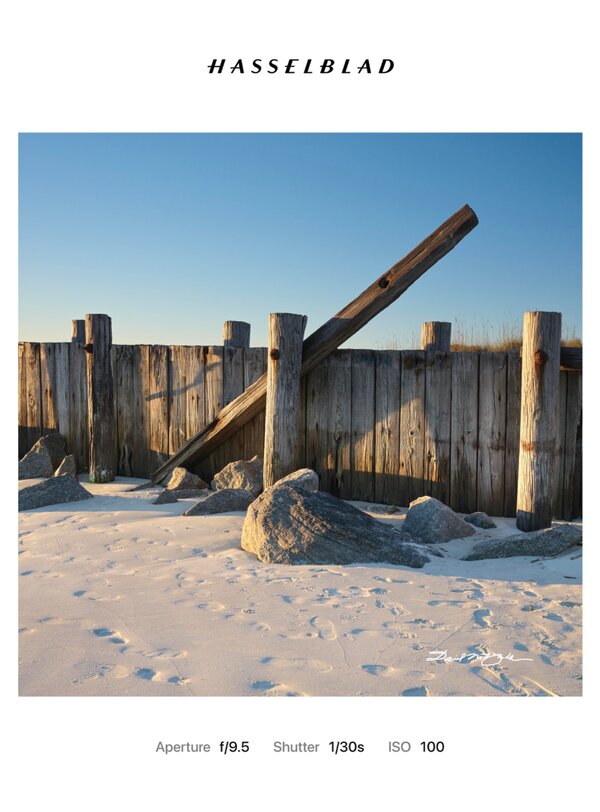
Hasselblad X2D2 with the XCD-38mm lens
The big trees are dropping ice-heavy branches, especially the fir trees. The power is out, not here but wherever the transformers we need are. We have a Generac, a whole house power unit, yet no need to use it. Everything here was completely iced yesterday, and then double-dipped for this morning. This is northern Michigan in winter.
I’m in here peering out at the ice and then, putting on ice cleats, I ventured outside briefly and snapped a few photos. It feels like a snow day when I was a kid and didn’t have to go to school. Anyway, I wanted to get back online for this post.
I am told that ‘professional’ photographers love the new Hasselblad XCD V series, the XCD 25mm, 28mm, 38mm, 55mm, 75mm, 90mm, and 35-100mm BECAUSE they are so similar in color, tone, and also have C-AF, and that aside from the length of the lens (mm), these lenses can be swapped seamlessly with one another to complete a photo project.
I can see how that is true, but I still favor differences in draw and style that make a particular lens special. I like the ‘special” and am used to it the Nikon system, both traditional and mirrorless. Don’t get me wrong. I love the older Hasselblad XCD lenses, yet I too appreciate the lighter weight, less bulk, and faster focus of the new XCD V series. Yet I do wonder if the IQ is as good as these older XCD lenses. To me, it’s not. And I have learned that with Hasselblad to go for the image quality and not the convenience on my aging body.
In other words, for me there are two trains running here and I can see the value in both sets of lenses, old and newer. For the street and field photographer, who has to back pack his lenses on foot, of course the newer XCD series is appreciated because their lighter weight and less bulk are a breakthrough.
Yet to the degree that the new V series loses any of the sharpness, and micro contrast of the older XCD series (like the 80mm f/1.9 and the 120mm f/3.5), I am troubled by that. Of course, we want it both ways, the finest glass and also the lightest weight and bulk, and I hate to choose between the two. Yet, if I do, I vote for the finer glass, unless I have to haul it around because of the significant added weight.
Since I am in the studio at least half the year because of the winter here in northern Michigan, in the studio I don’t care about the weight and bulk factors of the older XCD lenses, although I am aware that they don’t in some respects measure up to the recent XCD lenses. And they don’t… quite.
I do love the convenience of these newer lenses, and I often find myself grabbing them more than I perhaps should. Some of the old lenses themselves are sharper and have more ‘style’ or whatever we could agree what makes a lens special. And some people are saying that although these newer lenses may NOT be as sharp, etc., yet they are good enough. What? Run that past me again, please.
And I hear loud and clear that many photographers don’t care or worry about losing a little sharpness or quality in the bargain, in trade for lighter weight, size, and focus speed. However, I would like to have both the finest glass and also the best autofocus, etc.
I hedge my own bets by getting as many of the new V XCD series as I can afford and keeping my older XCD lenses as well. That will be my solution, although that’s an expensive decision: keep all of them. I don’t believe that I will give up the XCD 80mm /f/1.9 lens, no matter how bulky, heavier, and slow the focus is.
Of course, I am not ignorant that over time, the new style lenses will drift us forward into adopting them and consigning the old- style XCD lenses to history. My only hope, as mentioned, is that over time the new style XCD lenses will regain whatever was lost in sharpness and style with the older series in favor of convenience.
Certainly, I do have enough of the new XCD series with the operative A-FC feature to satisfy my need for them. And I have already decided not to sell off my older XCD lenses, but I will hang on to them until I’m sure I don’t need them
Yet not all of us are street photographers or sports photographers, in particular those who worry about how the new XCD lenses fare with shooting landscape photos. And I don’t feel it is fair or correct to dismiss the landscape crowd and say they are just pixel peepers or whatever. That’s not the case IMO.
Photographers like Lloyd Chambers, who specialize in how lenses behave for landscape shooting, very carefully points out and documents the effects of an undue amount of focus-shift for landscape photos in a lens and how some focus shift is almost impossible to adjust away. I have tested his tests and he is correct. However, what he points out will not trouble most folks, even me, because I am not a landscape photographer, except when I am.
In other words, I don’t happen to be that skilled in landscape photography, so I’m not too worried about these problems for my work, yet as mentioned I have examined for myself what Chambers points out, and he is right on the money about the existence of focus shift problems for some of the newer Hasselblad XCD lenses. We can measure it.
I am more interested in the new lenses being free of Chromatic aberration, lenses that are sharp enough for that not to be a problem, and what matters to me more are color, micro-contrast, and composition. For my work, the focus shift problems with the new XCD lenses don’t impinge on what I am doing, because I lean more toward close-up and midrange photography. Yet I can understand why the landscape crowd is concerned.
So, I’m happy with the new XCD lenses for all the reasons they are popular and I am already using them much of the time, and again, often for convenience. They are expensive and I try to but used and they seem fine. At the same time, I’m not about to give up the XCD 120mm, the XCD 80mm f/1.9, and some other early XCD lenses. At least that’s my view until the IQ of the newer lenses (which is good enough for most everything) is improved or even better new lenses appear.
What I ‘AM’ missing is a new and more modern XCD macro lens that is as sharp as the old XCD 120mm, and perhaps a replacement for the XCD 135mm with a teleconverter that is light, portable, and yet of the same quality.
Hasselblad X2D2 with the XCD-38mm lens